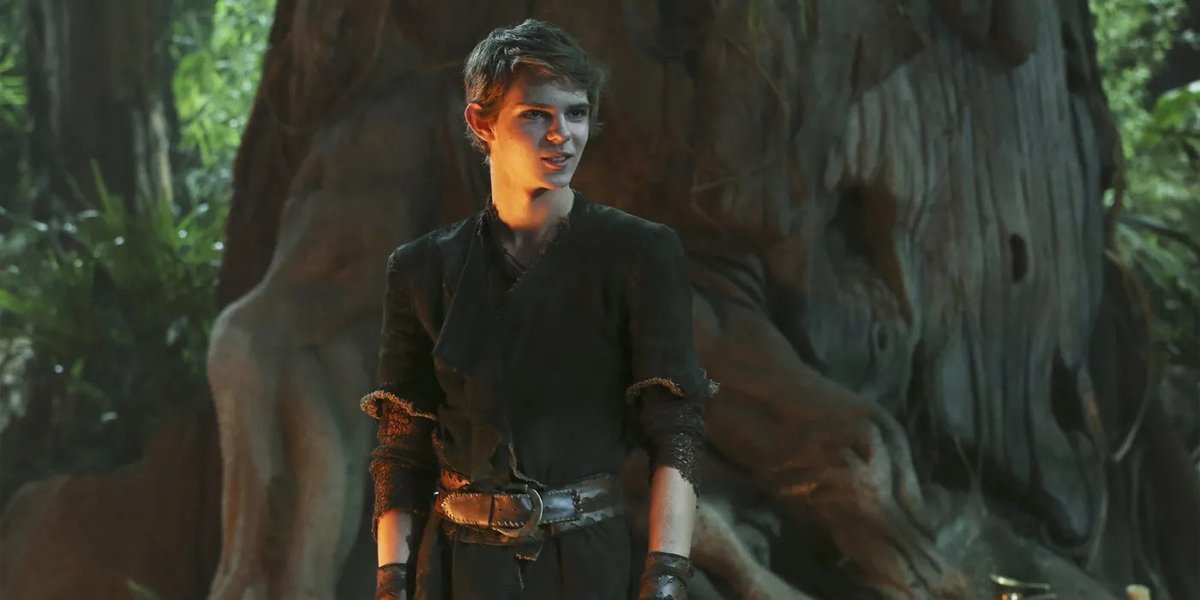
Remember when the biggest threat in Storybrooke was a curse that everyone had forgotten? Ah, simpler times. Once Upon a Time always excelled at twisting familiar fairy tales into fresh, compelling narratives, but Season 3 truly elevated the game, plunging our heroes into the perilous realms of Neverland and the enchanted forests, bringing forth two of the show's most memorable and malicious antagonists: Peter Pan and The Wicked Witch of the West.
This wasn't just a duo of new faces; these were villains who didn't just want power or revenge, they aimed to unravel the very fabric of our heroes' lives, exploiting their deepest fears and most guarded secrets. From Pan's chilling manipulation in the jungles of Neverland to Zelena's emerald-green machinations in a Storybrooke under siege, Season 3 was a masterclass in villainy that left an indelible mark on the series and its beloved characters.
At a Glance: Diving Deep into Season 3's Antagonists
- Peter Pan (Arc 1): Not the playful boy of lore, but an ancient, manipulative, and incredibly dark entity seeking eternal youth and power through Henry Mills. He exploits family trauma and creates deep psychological rifts.
- The Wicked Witch of the West (Arc 2): Revealed as Zelena, Regina's elder half-sister, driven by decades of abandonment, jealousy, and a twisted desire to rewrite her destiny by stealing what she believes is rightfully hers.
- Thematic Focus: Season 3 explored themes of family legacy, sacrifice, the true cost of magic, and the cyclical nature of good and evil, often mirroring the villains' plights in the heroes' journeys.
- Impact on Heroes: Both villains forced characters like Emma, Regina, Rumple, and Snow to confront their pasts, make impossible choices, and redefine their understanding of heroism and sacrifice.
- Twists and Reveals: The season was packed with mind-bending reveals, from Pan's true identity to Zelena's familial connection, keeping viewers on the edge of their seats.
Journey to the Season of Two Evils: Setting the Stage for Season 3
Before these iconic villains even stepped fully into the spotlight, Season 3 began with a desperate mission: rescuing Henry Mills from the clutches of a mysterious, shadow-like entity that had taken him to Neverland. The first half of the season was a high-stakes adventure, pulling almost the entire main cast – Emma, Snow, Charming, Regina, and even Mr. Gold (Rumplestiltskin) – onto Captain Hook’s ship, the Jolly Roger, and directly into the heart of a truly ancient and insidious evil. This initial arc laid the groundwork for the season's intensity, reminding us that even the most well-known fairy tales could harbor unimaginable darkness.
The second half of the season, following the Neverland arc, thrust our heroes into a new crisis. A new, formidable adversary arrived in Storybrooke, seemingly out of nowhere, bringing a vibrant, dangerous magic unlike anything seen before. This structural split, with two distinct yet equally impactful villain arcs, gave Season 3 a dynamic energy, constantly shifting the stakes and forcing both the characters and the audience to adapt to rapidly evolving threats. It’s a testament to the show's storytelling prowess that it could introduce such complex, multilayered villains back-to-back and make each feel like a singular, defining challenge. If you're looking for an in-depth look at the broader narrative, you can Explore Once Upon Season 3 to understand how these villain arcs fit into the grand scheme.
The Boy Who Wouldn't Grow Up: Deconstructing Peter Pan's Reign of Terror
The Neverland arc presented a Peter Pan far removed from the whimsical, innocent boy who taught children to fly. Once Upon a Time's Peter Pan was a chilling embodiment of arrested development turned malevolent, an ancient spirit trapped in a young boy’s body, driven by an insatiable hunger for magic and eternal life. His true nature as the original Dark One's father, Malcolm, added a layer of profound generational trauma to his villainy, making his conflict with Rumplestiltskin intensely personal and deeply tragic.
Who Was This Pan? A History of Heartbreak and Hubris
When we first encounter Pan, he’s presented as the enigmatic ruler of Neverland, holding Henry captive. However, the revelation that Peter Pan is, in fact, Malcolm, Rumplestiltskin's father, was a masterstroke of storytelling. Malcolm abandoned his son for the promise of eternal youth in Neverland, sacrificing his own progeny for a selfish fantasy. This wasn't just a character twist; it was a foundational blow to Rumple's entire psyche, explaining so much of his own daddy issues and his relentless pursuit of power to compensate for abandonment. Pan's desire to extract Henry’s heart – the truest believer’s heart – wasn't just about survival; it was about solidifying his immortality and power, an ultimate act of consumption that mirrored his initial abandonment of Rumple. He sought to replace the son he failed with the grandson he could control.
Neverland's Dark Heart: Pan's Grip on the Lost Boys and Magic
Pan's Neverland was no paradise. It was a land steeped in fear and manipulation, where the Lost Boys were not just his followers, but extensions of his will, boys who had lost their way and their hope, easily swayed by Pan's promises and threats. He controlled the island's magic, creating illusions, setting traps, and using the very landscape as a weapon. His shadow, a sentient entity, served as his enforcer, capable of stealing others to his island. The magic of Neverland itself seemed to bend to his malevolent intentions, mirroring his twisted desire to halt time and growth. This made the heroes' mission not just a physical rescue but a spiritual battle against a deeply entrenched, systemic evil.
The Art of Manipulation: How Pan Played the Heroes
Pan’s true power lay not in brute force, but in his unparalleled ability to exploit the emotional vulnerabilities of his opponents. He knew everyone's deepest fears and regrets, using them as psychological weapons.
- For Emma: He preyed on her fear of being abandoned and her struggle to accept her role as the Savior, trying to convince her she wasn't good enough to save Henry.
- For Snow and Charming: He exposed their guilt over giving Emma up and their longing for a simpler life, creating rifts within their marriage by suggesting that their love was a weakness.
- For Regina: He used her pain of losing Henry to manipulate her, highlighting her past darkness and suggesting that she could never truly change.
- For Rumplestiltskin: This was his most personal game. Pan relentlessly taunted Rumple about his past failures, his cowardice, and the cycle of abandonment that plagued their family line. He pushed Rumple to confront the very definition of "family," forcing him to choose between saving Henry and settling an ancient score with his father. Pan even switched bodies with Henry, a truly horrifying act designed to break Rumple's spirit and steal his magic.
His whispers sowed discord, his illusions fed paranoia, and his promises tempted even the most resolute. He didn't need to fight; he just needed to make the heroes fight themselves.
The Stakes of Family: Pan's Connection to Rumpelstiltskin
The father-son dynamic between Pan and Rumple was the emotional core of the Neverland arc. It explained Rumple's own abandonment issues and his lifelong struggle with power and self-worth. Pan's constant taunting, his casual cruelty, and his ultimate willingness to sacrifice his grandson for his own gain highlighted the generational trauma that fueled the Dark One. This was not a simple villain vs. hero battle; it was a deeply personal saga of a son trying to break free from the poisonous legacy of a father who never truly loved him. The tragic irony of Pan, a child-like figure, being the progenitor of the Dark One, added a profound layer of darkness to the very origin of magic in the OUAT universe.
Impact on the Heroes: Emma's Struggle, Henry's Fate
Pan’s presence forced a massive evolution for several characters:
- Emma: The Neverland arc solidified Emma's identity as the Savior and a mother. Her unwavering determination to save Henry, despite Pan's psychological games, showcased her growth from a cynical bail bonds agent to a true heroine. It was in Neverland that she truly started to trust magic and her own instincts.
- Henry: As the "truest believer," Henry's heart was Pan's ultimate prize. His unwavering faith, ironically, made him the perfect target. The ordeal forced Henry to confront the darker side of magic and sacrifice, setting him on a path of greater understanding and resilience.
- Rumplestiltskin: Pan's arc pushed Rumple to his absolute breaking point. His internal conflict between protecting Henry and finally defeating his father was agonizing. Ultimately, his final act against Pan – sacrificing his own life to kill his father and save everyone – was a moment of selfless heroism, albeit one that came at a terrible price.
Pan's Downfall: A Tragic (and Vicious) End
Peter Pan's reign of terror culminated in a desperate attempt to cast a new curse over Storybrooke, resetting it to his Neverland dream. It took the combined strength and ultimate sacrifice of Rumplestiltskin, who used the Dark One's dagger to kill both himself and Pan, to stop him. The visual of Rumple plunging the dagger through his father (and himself) was a powerful, gut-wrenching moment. Pan’s end was horrific, reverting him to his original form (an old man) before turning to dust, a final, fitting defeat for one who so desperately clung to youth and power. His arc served as a stark reminder that some evils are so deeply rooted, they require the ultimate sacrifice to truly vanquish.
Emerald Green Envy: The Wicked Witch of the West's Calculated Revenge
No sooner had the dust settled from Pan’s curse (and the subsequent second curse that sent everyone back to their original realms with altered memories) than a new, vibrant, and incredibly dangerous threat arrived. The second half of Season 3 introduced Zelena, the Wicked Witch of the West, a character whose green skin and cackling laugh instantly marked her as a classic villain, but whose motivations were anything but simple.
Zelena's Arrival: A New Shade of Evil
Zelena's entrance was dramatic and mysterious. Cloaked in emerald green, she arrived in Storybrooke with a clear agenda: to steal key magical ingredients from various main characters. Her initial targets – Snow White's newborn, Charming's courage, Regina's heart, and Rumplestiltskin's dark magic – hinted at a grand, sinister plan. She brought with her a new form of powerful magic, a primal force capable of manipulating elements and even time itself. This wasn't just another villain seeking power; Zelena was after something much more personal and deeply rooted in the show's lore.
The Green-Eyed Monster: Zelena's Deep-Seated Motivations
Zelena’s true identity as Regina’s older half-sister, born to Cora before she became the Queen of Hearts, was a shocking revelation. Abandoned by Cora because she was "unloved" and "unwanted," Zelena was raised in Oz, believing herself unloved and cast aside in favor of Regina. This fostered a profound, almost pathological, jealousy that became the driving force of her entire existence.
Her motivations were meticulously outlined:
- Resentment of Regina: Zelena believed Regina had everything she should have had – a loving family (even if twisted), a kingdom, and a chance at happiness. She wanted to strip Regina of everything she cherished.
- Desire for Love and Acceptance: Underneath the malice, Zelena desperately craved the love and validation she was denied. Her actions were a twisted attempt to reclaim a past where she was chosen.
- Rewriting History: Her ultimate goal was to travel back in time to prevent Cora from abandoning her, thus stealing Regina's life and ensuring her own "happy beginning." This wasn't just about revenge; it was about erasing her pain and creating a new reality where she was the favored daughter.
- Targeting Rumplestiltskin: Zelena's connection to Rumple was also significant. She was one of his students, learning dark magic from him, and developed an obsessive, unrequited love for him. She intended to conceive a child with him in the past to ensure her own birth, further cementing her control over her destiny.
Time Travel and Dark Magic: Zelena's Schemes
Zelena's plan was intricate and terrifying. She sought specific components for a powerful time-travel spell:
- Snow White's innocence/newborn: To power the spell with pure potential.
- Charming's courage: To empower the journey.
- Regina's heart: The heart of a sister, a potent magical ingredient for a family-driven curse.
- Rumplestiltskin's magic: To amplify the spell's force.
- The Wizard of Oz's power (magic from his hat): The final piece of the puzzle.
Her relentless pursuit of these items put her in direct conflict with every major hero, demonstrating her cunning and ruthless efficiency. She manipulated Rumplestiltskin, keeping him under her control through a magically bound dagger and using him to do her bidding, highlighting her mastery over dark magic and her psychological insights into Rumple's weaknesses.
The Power of Sisterhood (and its Corruption): Zelena vs. Regina
The central conflict of Zelena's arc was her rivalry with Regina. This wasn't just a hero-villain dynamic; it was a deeply personal sibling feud rooted in the choices of their mother, Cora. Zelena saw Regina as a usurper, someone who unknowingly stole her rightful place. Regina, initially oblivious to their connection, eventually had to confront the pain of realizing she had a sister who despised her, and that her mother's choices had created such a monster. The resolution involved Regina not just defeating Zelena magically, but offering her a path to redemption, a gesture of sisterly compassion that Zelena was initially unable to accept. Their relationship became a nuanced exploration of nature vs. nurture, and whether destiny can truly be defied.
Unraveling the Mystery: The Reveal of Zelena's Identity
The build-up to Zelena's true identity was masterful. The initial mystery surrounding her motives and her specific targets kept viewers guessing. The reveal that she was Regina's sister, and Cora's firstborn, was a significant twist that recontextualized much of Cora's past actions and added profound depth to Regina's character arc. It highlighted the show's commitment to interconnected narratives and the idea that every character, no matter how villainous, has a complex backstory that shapes their present. This reveal made Zelena not just a generic "Wicked Witch" but a character whose pain and desire for belonging resonated, even as her actions remained reprehensible.
Consequences and Lingering Scars: Zelena's Legacy
Zelena's arc concluded with her plan foiled by Regina, who, instead of killing her, chose to remove her magical powers and lock her away, hoping for a possibility of redemption. However, even without her powers, Zelena left a lasting impact. Her actions forced Rumplestiltskin to confront his dark side once again and led to his near-death experience, saving Henry. More significantly, her magic set off a chain of events that inadvertently brought Elsa and Anna to Storybrooke, directly leading into Season 4. Zelena's influence, unlike Pan's definitive end, continued to ripple through the series, with her eventual return and complex, fluctuating morality becoming a recurring theme. She demonstrated that some scars, especially those inflicted by family, run too deep to simply disappear.
A Tale of Two Villains: Comparing Pan and Zelena's Styles of Evil
Season 3 gave us two distinct flavors of villainy, each formidable in their own right, but fundamentally different in their approach, motivation, and impact. Understanding these differences helps us appreciate the narrative complexity Once Upon a Time consistently delivered.
Psychological Warfare vs. Direct Confrontation
- Peter Pan: Pan was a master of psychological manipulation. He rarely engaged in direct physical combat, preferring to twist truths, exploit fears, and sow discord among the heroes. His battlefield was the mind, and his weapons were words and illusions. He aimed to break people from the inside out, turning them against each other and themselves. His evil was insidious, creeping into the heroes' thoughts.
- Zelena: While Zelena certainly understood manipulation (as evidenced by her control over Rumplestiltskin), her style was much more direct and overtly magical. She used powerful spells, curses, and physical confrontations to achieve her goals. Her magic was vibrant and destructive, and she wasn't afraid to demonstrate it. Her evil was bold, unapologetic, and outwardly aggressive, making her a more immediate and visible threat.
Motivations: Pure Malice vs. Deep-Seated Resentment
- Peter Pan: Pan's evil stemmed from a primal, selfish desire for eternal youth and power, born from his abandonment of his son. His malice was almost pure, a deep-seated contempt for growth, responsibility, and the natural order of life. He relished in cruelty and saw others purely as means to an end.
- Zelena: Zelena's motivations were rooted in profound, decades-long resentment, jealousy, and a desperate craving for love and belonging. Her villainy was born from a place of deep hurt and a desire to undo the injustice she felt she suffered. While her actions were undeniably evil, there was a tragic, almost sympathetic undertone to her character, driven by a desire for a "happy beginning" that she felt was stolen from her.
Impact on the Overall Narrative: Short-Term Crisis vs. Long-Term Character Development
- Peter Pan: Pan's arc was a focused, intense crisis. It pushed the heroes to their limits in a concentrated period, culminating in a dramatic, definitive resolution. His impact was immediate and devastating, requiring the ultimate sacrifice from Rumplestiltskin to overcome. While his story had profound implications for Rumple's past, his direct threat was resolved within his arc.
- Zelena: Zelena’s impact was arguably more far-reaching and nuanced. Her plan to change the past had significant consequences for the heroes, particularly Regina, and the magical fallout directly set up the entire next season's arc with Frozen. Unlike Pan, who was definitively vanquished, Zelena survived and returned in later seasons, her struggle between good and evil becoming a recurring theme, allowing for deeper character development and exploration of redemption.
Who Was the "Greater" Threat?
This is a subjective question often debated among fans.
- Pan represented an existential threat to Henry's very soul and the possibility of a "happy ending" for anyone. His personal connection to Rumple made his manipulations uniquely painful and effective. He threatened the very concept of family and responsibility.
- Zelena represented a more personal, emotional threat, one rooted in the origins of magic and family betrayal. Her desire to rewrite history put not just lives, but entire timelines, at risk. Her ability to tap into fundamental magic and her lingering presence made her a persistent danger.
Ultimately, both were incredibly effective villains. Pan was a terrifying force of nature, a pure, concentrated dose of evil that required radical action to stop. Zelena was a complex, tragic figure whose pain fueled her power, making her both dangerous and, at times, pitiable, leaving a legacy that continued to evolve throughout the series.
Beyond the Villains: What Season 3 Taught Us About Heroism
The challenges posed by Peter Pan and Zelena weren't just about defeating evil; they were crucibles that forged the heroes anew. Season 3 provided profound lessons on what it truly means to be a hero in a world of complex moral ambiguities.
The Grey Areas of Morality
Both villains, particularly Zelena, highlighted the show's recurring theme that good and evil aren't always black and white. Zelena's backstory, driven by parental abandonment, forced characters (and viewers) to consider the origins of villainy. Could someone born into such circumstances truly be irredeemable? This arc consistently asked if empathy could extend to those who commit heinous acts, and whether changing circumstances could ever lead to a change of heart. For heroes like Regina, who struggled with her own dark past, Zelena's existence served as a stark mirror.
Family Bonds Under Fire
Family was both the source of strength and vulnerability throughout Season 3. Peter Pan, as Rumple's father, twisted the concept of family into a weapon, using the bonds between parents and children to manipulate. Zelena, driven by jealousy of her sister Regina, embodied the destructive power of fractured familial relationships. Yet, it was the unbreakable family bonds – Emma's determination to save Henry, Snow and Charming's unwavering love, Regina's growing connection to her loved ones – that ultimately provided the heroes with the resolve to overcome these threats. The season underscored that while family can inflict the deepest wounds, it can also provide the strongest shield.
The Enduring Power of Love (and its Twisted Reflections)
Love, in its many forms, was a powerful force. Emma's unconditional love for Henry, Snow and Charming's true love, and even Regina's evolving love for her found family, were all key to overcoming the villains. However, the season also explored the twisted reflections of love: Pan's selfish "love" for eternal youth, Zelena's desperate, unrequited love for Rumple, and her envious "love" for the life she believed Regina stole. These warped versions of love showed how a powerful emotion, when corrupted by selfishness or pain, could become a catalyst for immense destruction.
Burning Questions Answered: Unpacking Common Fan Queries
Season 3 left a lot for fans to chew on, and some questions lingered long after the credits rolled. Here are a few common ones, addressed directly.
Was Pan truly irredeemable?
For all his charm and cunning, Once Upon a Time's Peter Pan was consistently portrayed as irredeemable. His backstory as Malcolm explained his motivations, but it didn't excuse his actions. He repeatedly chose power, youth, and self-preservation over any familial bond or moral consideration. His final act, trying to cast a dark curse on Storybrooke to create his own twisted Neverland, cemented his status as a villain beyond redemption. Unlike Rumplestiltskin, who always had a glimmer of humanity struggling beneath the Dark One's influence, Pan exhibited no such internal conflict or desire for good. His fate, to be erased from existence by his own son, was a tragic but fitting end for a character who had consistently chosen selfishness over love.
Could Zelena have been redeemed earlier?
Zelena's path to redemption was a long, arduous one that spanned several seasons. In Season 3, she was so consumed by resentment and her desire to rewrite her past that she was likely beyond immediate redemption. Regina's choice to remove her powers rather than kill her offered the first seed of hope, but Zelena's internal demons were too strong at that point. Her journey toward genuine change required multiple losses, moments of self-reflection, and finally, a choice to embrace her newfound family and motherhood over her thirst for revenge. Had Regina or others simply tried to talk to her in Season 3, it's highly probable Zelena would have dismissed it as a manipulation, her pain too raw to accept kindness. Redemption, for characters like Zelena, often comes from within, after they've exhausted all their destructive options.
How did these villains change the heroes permanently?
Both Pan and Zelena left lasting impacts:
- Emma: Neverland cemented her as the Savior and a true believer, forcing her to embrace her magic and her role. The experience deepened her relationship with Henry and solidified her place in her family.
- Regina: Zelena's arc forced Regina to confront her mother's past in a deeply personal way and challenged her to choose a path of compassion over revenge, marking a significant step in her transition from Evil Queen to a heroic figure. The ordeal also highlighted her fierce protectiveness of Henry and her newfound family.
- Rumplestiltskin: Pan's arc led to Rumple's first selfless sacrifice, a profound moment of heroism that seemed to break the generational curse of abandonment. Although he returned later, that act changed his character significantly. Zelena's manipulation also kept him enslaved and tested his resolve, showing his enduring struggle with the Dark One's power.
- Snow and Charming: The Neverland arc forced them to confront their fears as parents and their own past mistakes. Zelena's arrival, coinciding with the birth of their second child, emphasized their unwavering dedication to protecting their family and the sacrifices they were willing to make.
Looking Back and Forward: The Enduring Legacy of Season 3's Antagonists
Season 3 of Once Upon a Time wasn't just a collection of exciting storylines; it was a defining period for the show's narrative ambition. By introducing Peter Pan and The Wicked Witch of the West, the series proved its ability to delve into the darkest corners of beloved fairy tales, extracting complex, psychologically rich villains who challenged the heroes on every level.
These antagonists didn't just pose external threats; they forced our characters to confront their inner demons, their past mistakes, and the very foundations of their identities. Pan stripped away pretenses, exposing raw fears and generational trauma. Zelena forced a reckoning with family legacies, the corrupting power of resentment, and the long, difficult road to forgiveness.
The impact of these villains resonated far beyond their respective arcs. Pan's actions led directly to the re-cursing of Storybrooke, setting the stage for Zelena's arrival. Zelena's time-travel machinations then opened the door to Arendelle, introducing the world of Frozen into the OUAT universe and kicking off an entirely new chapter. Their stories weren't just contained episodes; they were pivotal turning points that reshaped the entire trajectory of the series, demonstrating how truly compelling antagonists can be the engine of narrative evolution.
When you revisit Season 3, you're not just watching a hero-versus-villain showdown. You're witnessing a profound exploration of what it means to be good, to be family, and to find your place in a world where even the most innocent stories can hide the deepest darkness. Peter Pan and The Wicked Witch stand as testaments to Once Upon a Time's creative genius, forever etched in the memories of fans as two of its most iconic and impactful antagonists. They set a high bar, reminding us that sometimes, the most dangerous foes are the ones who reflect our own twisted potentials.